After a collision, put people and safety first. Then preserve information and make the required reports. A police report, notifying your insurer and deciding whether to claim repair costs are related but separate steps.
This guide combines A-Z Insurance's accident-response and collision-reporting articles for Ontario drivers.
1. Check for danger and call 911 when emergency help is needed
Check for injuries, fire, leaking fuel or other immediate danger. Call 911 when urgent help is needed and follow the operator's instructions. Do not stand in traffic to take photographs or risk your safety to place warning equipment.
If nobody needs urgent help and the vehicles are safe to drive, move them to a safe place out of traffic when possible. If they cannot be moved, protect yourself and your passengers according to the situation and police instructions. Do not move an injured person unless remaining there poses an immediate danger or emergency personnel instruct you to do so.
2. Contact the police service responsible for the location
The MTO handbook says a collision must be reported to police if anyone is injured or the combined damage to vehicles and other property exceeds CAD 5,000. That means all involved vehicles and property together, not a separate threshold per vehicle or only two vehicles.
Suspected impaired driving, other criminal activity, a hit-and-run, damage to public property and other circumstances can also require police involvement. Use 911 for emergencies. Otherwise, contact the responsible police service to confirm whether an officer should attend, you should visit a Collision Reporting Centre, or an eligible online process is available.
There is no universal Ontario rule that every collision can or must be reported online within 24 hours. Local eligibility, procedures and deadlines vary. York Regional Police, for example, requires an incident number before an eligible online collision report is submitted. A reporting centre is not the first stop when someone needs emergency care.
Toronto Police reporting guidance; York Regional Police reporting guidance
3. Record the facts safely and exchange information
Record the time and location, driver and vehicle details, names, addresses, phone numbers, driver's licence information, licence plates, vehicle registration and insurer/policy information. Obtain witness contact details where possible.
If it is safe, photograph:
- The overall scene, vehicle positions, lanes, markings and signs.
- Licence plates and damage to the vehicles.
- Relevant marks, debris and the surrounding area.
Describe what you actually observed and did. Do not conceal facts, guess or agree to take all responsibility just to end the discussion. Photographs and other evidence can support an investigation, but do not guarantee a fault or claim outcome.
4. Notify your insurer without waiting for the police report
FSRA says an accident involving injury or property damage must generally be reported to your insurer within seven days, regardless of fault. If you cannot report within that time, do so as soon as possible.
Notify the insurer first, then provide the incident number, photographs, other driver's information and further documents as they become available. Not yet having a police report number is not a reason to delay insurance notification. Do not wait until renewal or postpone notification while considering a private settlement.
Reporting an accident is separate from deciding whether to seek payment. Discuss repair estimates, coverage, deductibles and the treatment of the incident with your insurer or broker. Being below a police damage-reporting threshold does not remove your insurance notification responsibilities.
Source: FSRA notification guidance
5. Seek medical advice based on your health needs
The purpose of medical assessment is your health, not simply creating an insurance record. For serious symptoms or a medical emergency, call 911 or obtain emergency care. For non-emergency questions, contact your healthcare provider or call Health811 for advice from a registered nurse. Health811 does not replace 911.
Follow professional advice about assessment and follow-up. Keep accurate records of relevant treatment and expenses.
Source: Ontario Health, Health811
6. Cooperate with the insurance investigation and repair process
Police investigate and enforce the law. Insurers assess insurance fault under the applicable Fault Determination Rules. A charge does not automatically mean full insurance fault, and no charge does not guarantee no fault.
Ask the adjuster which coverage applies, what deductible is payable, how repairs will be arranged and what documents are needed. Any future premium impact depends on fault, coverage and applicable rating rules; it cannot be guaranteed in advance.
If you disagree with an assessment, ask which Fault Determination Rule was applied. Use the insurer's complaint process if the disagreement remains unresolved.
Source: FSRA claims-process guidance
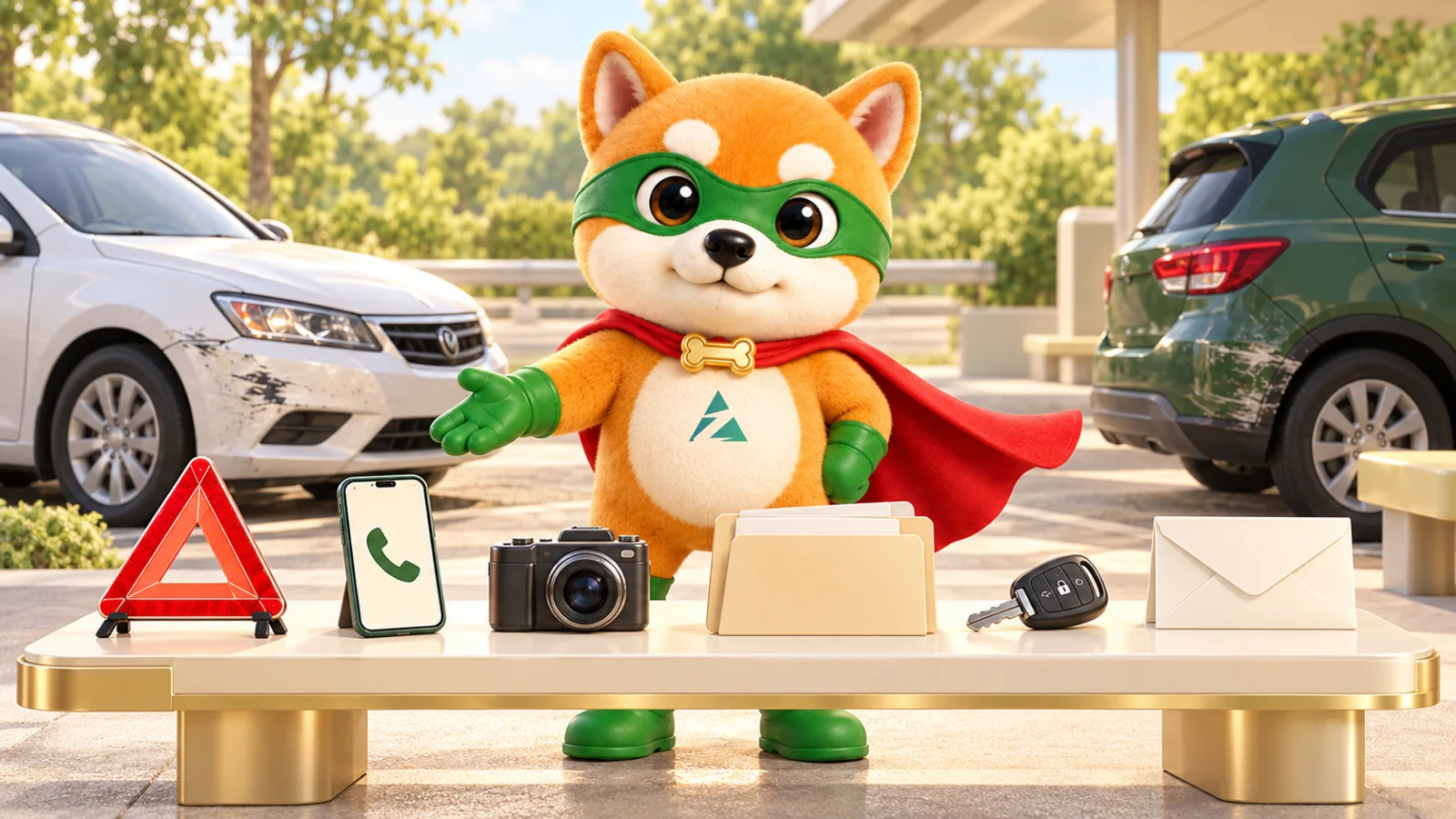
Keep a small information kit ready
Have your driver's licence, registration, proof of insurance, insurer's reporting details, and a pen and paper available. Follow police instructions for providing documents. Do not post identity documents or policy photographs publicly on social media.
Safety first, then accurate records, police reporting as required and prompt insurance notification.
For help understanding your policy or insurance next steps, contact A-Z Insurance at 905-707-2929 or info@azinsure.ca. In an emergency, call 911 rather than waiting for a broker to respond.
This is general information, not a medical, legal or coverage determination for an individual collision. Follow emergency instructions, applicable law and your actual policy terms.