
Published on this website: October 19, 2026
A-Z Insurance · Information checked: 2026-10-11 · Original publication date unknown
A thaw, especially when combined with rain, is a good time to watch how water moves around your home. Water can enter through surface drainage, the foundation, window wells or plumbing systems. Different causes can lead to different insurance outcomes.
A blanket answer that home insurance never pays is unhelpful. So is assuming an endorsement called “overland water” covers every kind of seepage. Identify the source and review the actual wording.
How melting snow can cause damage
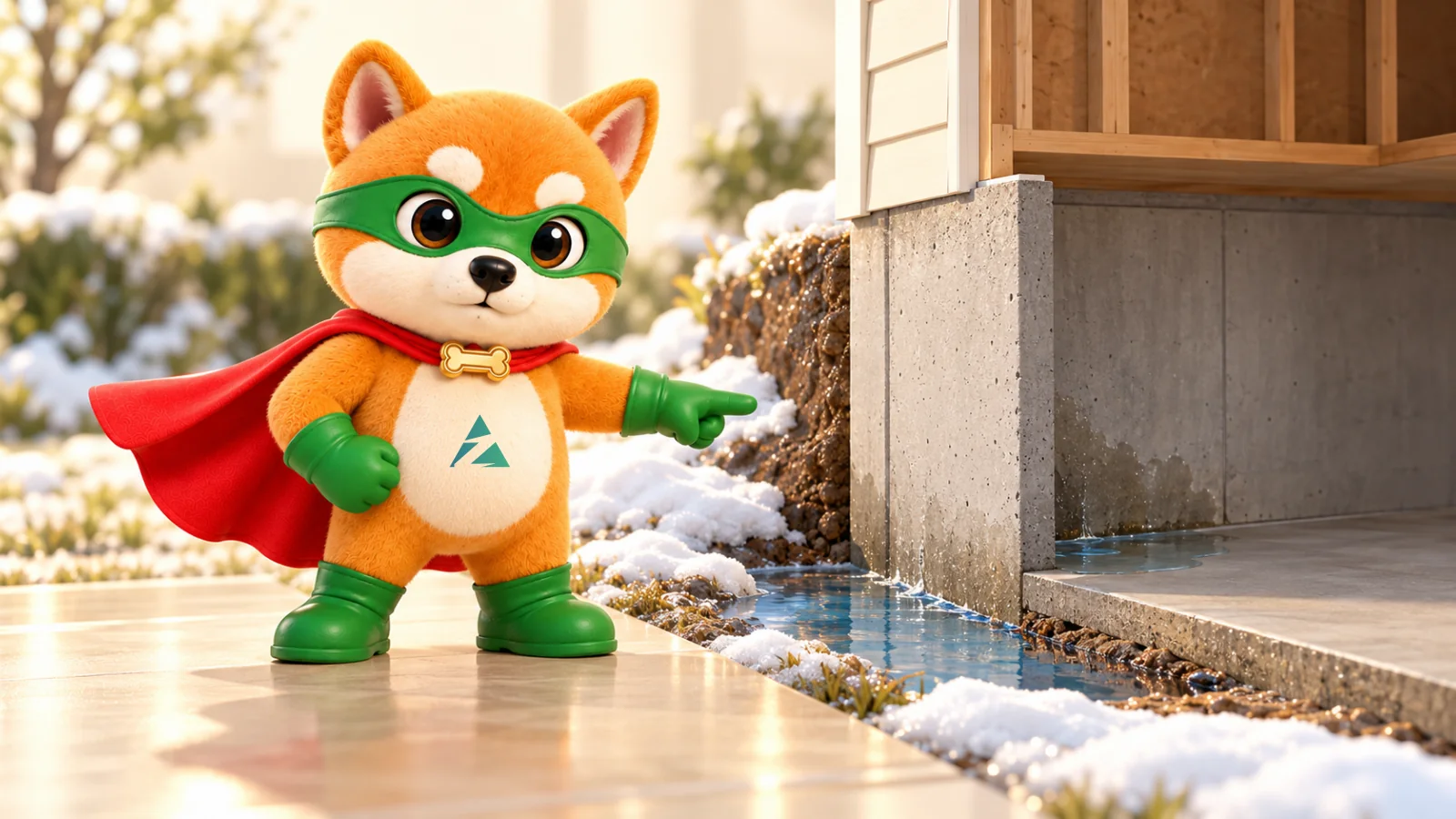
Snowmelt creates runoff. Frozen ground and poor drainage can allow water to collect around a building. Toronto warns that basement flooding can occur during snow and ice melt, including at homes that have not flooded before. Toronto’s basement-flooding guidance
A roof can face a separate problem: an ice dam may trap meltwater and allow it to back up beneath roofing materials. That is different from water entering at or below ground level and needs its own assessment. Natural Resources Canada on ice dams
Record where and when you first noticed water and the weather conditions. Have the cause assessed rather than deciding from appearance alone.
Separate three water-coverage questions
Overland water
This generally concerns fresh surface water entering a home after events such as heavy rain, rapid snowmelt or overflowing rivers and lakes. Definitions, entry routes, availability and limits depend on the insurer and policy.
Sewer backup
Water backing up through drains, sewers or septic systems may fall under sewer-backup provisions. It is not the same mechanism as surface water entering around a window. Conditions still need review even when several protections are sold together.
Groundwater and seepage
Check for explicit coverage and restrictions where water enters through foundations or relates to a rising water table. Sudden entry and gradual or repeated seepage may be treated differently. The endorsement’s title alone does not answer the question.
Intact’s consumer FAQ distinguishes these sources and notes that package availability varies by property and province. Its product structure should not be assumed to apply to every insurer. Intact’s explanation of water coverages
IBC also notes that groundwater and seepage are not standard protections across all home policies. Even where water coverage has been purchased, deductibles, limits and exclusions remain important. IBC on flooding and insurance
Questions to ask before renewal
- Which overland-water, sewer-backup and groundwater protections do I currently have?
- What provisions may apply to snowmelt entering through a window well, wall crack or floor?
- What are the deductibles and limits, and are any limits shared?
- What restrictions apply to pump failure, power interruption or ongoing seepage?
- Are the basement finishes and stored belongings adequately insured?
- Are there installation, maintenance or equipment conditions for the coverage?
Ask your broker to identify the relevant wording. Installing drainage equipment can reduce risk without changing what the contract insures.
Think beyond a waterproof coating
Check snow piles, downspout outlets, window wells and yard drainage. Avoid directing runoff onto neighbouring property or creating an icy walkway. Leave high gutters and roof snow to people with suitable equipment rather than using icy ladders or climbing onto a winter roof.
Toronto recommends maintaining downspouts, grading away from the foundation, and having a licensed plumber assess foundation drainage, sump pumps and backwater valves. Discuss backup power and ongoing maintenance for protective equipment. Toronto’s prevention measures
Repeated leakage, widening cracks or unexplained dampness need a cause-based assessment. A coating or window-well cover cannot guarantee a complete solution. A water alarm can provide an earlier warning, but someone still has to respond.
If water is already in the basement
Do not walk through water to reach an electrical panel or pump. If water has reached electrical equipment, outlets or heating systems, or is near the panel, contact the utility for disconnection and a Licensed Electrical Contractor for assessment. Rubber boots, gloves or lights being off do not establish that entry is safe. ESA’s flood-safety guidance
Call 911 for an immediate threat to life. Once safe, notify the insurer promptly, arrange reasonable mitigation and retain photos, assessments and receipts. Do not let damage worsen while waiting for a claim decision, or assume that a full rebuilding contract has already been approved. IBC’s home-claim guidance
Contact A-Z Insurance to review your existing water coverage. Have your policy and information about any previous water entry available. Phone: 905-707-2929. Email: info@azinsure.ca.
This article is general information, not a live weather alert or an individual coverage decision. Consult official current forecasts for weather. Insurance depends on the policy, cause and claim assessment.