You submitted your auto insurance details but still have no quote. Instead of starting the form again, ask where the request stands, what is missing and why a quote has not been provided. This checklist is for Ontario private-passenger auto insurance consumers.
Start with an existing protection
Ontario’s Take-All-Comers requirements protect access to quotes or renewals for consumers who meet an insurer’s approved underwriting rules. FSRA announced guidance on November 15, 2021. Checked on October 30, 2026, this article explains an existing requirement, not a law introduced today.[2][3]
This does not mean every applicant qualifies for every insurer. Insurers must accept business that meets their approved rules; premiums can differ by circumstances. The questions are whether your circumstances meet the relevant insurer’s rules and whether your request is being handled appropriately.
Ask four practical questions
- Has my request been received, and who owns the next step? Confirm the contact person, reply method and expected follow-up.
- What information is missing? Ask for its purpose and a secure way to provide it. Do not post licence or policy documents in public comments.
- Is the quote waiting on verification, a technical problem or an insurer’s decision? If it is a decline, ask which insurer and why.
- When a quote is available, which coverages, deductibles or optional items differ from my request? Ask for written information you can compare.
These are suggested questions, not a regulator-set response deadline. One website error does not establish misconduct, but an unexplained wait is not a completed quote.
Keep a short communication record
Note the first request date, platform, contact person, when you supplied additional information and the explanations received. Save confirmation emails or on-screen messages. Distinguish an online estimate, a broker’s quote and confirmed coverage. Redact unnecessary identity numbers and verify the recipient before sharing records.
FSRA advises consumers facing unexplained insurer delays, unanswered requests or information demands to document exchanges and contact the insurer’s complaint officer. An unresolved matter or suspected Insurance Act breach can be raised with FSRA.[1] For concerns about a registered broker’s service or conduct, consult RIBO’s complaint process.[4]
Understand the coverage behind the price
RIBO’s consumer fact sheet says brokers should explain product choices against the customer’s needs, including whether lower-cost options are suitable.[5] Review the coverage as well as the total premium.
To discuss your auto insurance needs with A-Z Insurance, begin with basic contact details and a general description. Arrange a secure channel before sending detailed documents. A quote request, website submission or complaint does not activate insurance; obtain separate confirmation of the insurance arrangement.
This article provides general information, not legal advice or a finding about any particular company. Eligibility, premiums and coverage depend on applicable rules, the formal quote and issued policy. No response time, savings or complaint outcome is guaranteed.
Related services
Public sources
- FSRA: Getting an Auto Insurance Quote (No separate publication date displayed)
- FSRA: Take-All-Comers information for Industry (No separate publication date displayed)
- FSRA: Take-All-Comers guidance announcement (2021-11-15)
- RIBO: Making a Complaint (No separate publication date displayed)
- RIBO: Fact Sheet About Your Registered Insurance Broker (Source filename dated 2022-04-06; no new issue date asserted)
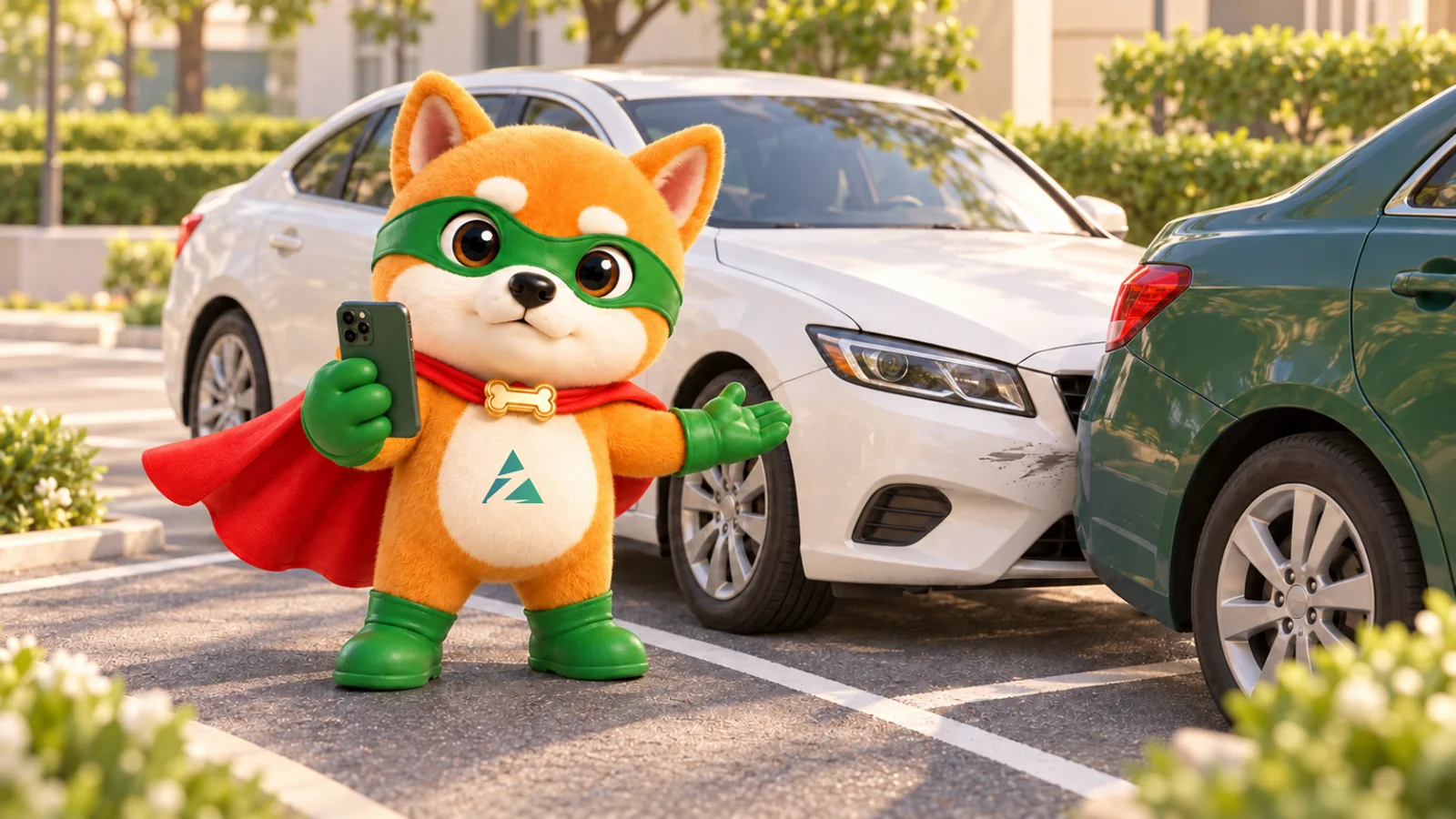
You finally find a parking space, start reversing, and hear a bump. Or you return to your parked car and discover a new scrape without knowing who caused it.
What happens next? Are parking lot collisions always split 50/50? Who is responsible when both drivers are reversing? Do you need to report a small scrape, and could it affect your premium?
A-Z Insurance explains how Ontario insurers assess fault and the steps to take after a parking lot collision.
1. A parking lot collision is not automatically 50/50
Ontario insurers use the Insurance Act and the Fault Determination Rules to assess insurance fault. They do not simply decide based on which car hit the other, and a parking lot location does not automatically mean equal responsibility.
The applicable rule depends on the established vehicle movements and circumstances described in the rules. Photographs can help document the incident and damage, but the point of contact on a vehicle is not, by itself, a basis for assigning fault under section 3 of the rules.
2. Common parking lot situations
One vehicle is driving along a lane while another reverses out of a space
In the straightforward situation where a vehicle leaves a parking space without yielding to a vehicle in a parking lane, section 16(4) assigns 100% fault to the vehicle leaving the space. Section 19 also addresses a vehicle that is backing up. If other rules apply, the insurer must consider them too.
Reverse slowly, check carefully and move only when it is safe.
Both vehicles are reversing
Where both vehicles were genuinely reversing when they collided and no other applicable circumstances change the analysis, a 50/50 allocation is the usual result of applying the reversing and overlapping-rule provisions. That is different from assuming every parking lot collision is 50/50.
The insurer still needs to establish what each vehicle was doing. Preserve the evidence rather than settling the question of fault through an agreement between drivers at the scene.
Your car was parked when another vehicle struck it
Section 17(1) generally assigns no fault to the parked vehicle and 100% fault to the striking vehicle. Being parked is not necessarily the same as momentarily stopping during a manoeuvre, and other applicable provisions may matter.
If it is safe, photograph both vehicles, their positions, the parking spaces and lanes, road markings, signs and the surrounding scene. Include close-ups of the damage as well as wider views.
3. You return to your parked car and discover damage
Before leaving, document the vehicle and damage. Look for a note, witnesses, nearby security cameras or possible dashcam footage.
Contact the shopping centre, building or parking operator promptly and ask whether relevant footage can be preserved. Availability, retention and disclosure depend on the operator's policies and applicable privacy requirements; do not assume footage will be released directly to you.
Contact your insurer and, for a suspected hit-and-run, the police service responsible for the location for reporting instructions. Do not assume that unidentified hit-and-run damage automatically qualifies for DCPD coverage.
4. What to do after a collision
Put safety first
Check for injuries and immediate danger. Call 911 if emergency assistance is needed. If nobody needs urgent help and the vehicles can be moved safely, move them out of traffic. Follow police instructions if you are unsure what to do.
Exchange information
Record the other driver's name, address, telephone number and driver's licence information, along with vehicle and licence plate details, insurer name and policy information. Obtain witness contact details when available.
Preserve evidence safely
Photograph the overall scene, vehicle positions, licence plates, damage, parking spaces, lanes, markings and signs. A short video may also help document the surroundings. Do not put yourself in danger to obtain photographs.
Follow the appropriate police reporting process
Ontario's MTO handbook says a collision must be reported to police if anyone is injured or damage to vehicles and other property exceeds $5,000. This means the combined damage, not a separate $5,000 allowance for each vehicle.
Other circumstances, including suspected criminal activity or a hit-and-run, can require police involvement. Contact the local police service for instructions about a Collision Reporting Centre or an eligible online process. Procedures and time limits vary by location.
A minor collision below the damage threshold still requires exchanging information, preserving evidence and meeting your insurer's notification requirements.
5. Who decides insurance fault?
The insurer investigates the incident and applies Ontario's Fault Determination Rules. Driver statements, photographs, diagrams, witnesses, police reports and available video can help establish what happened.
A police charge does not automatically determine insurance fault. Equally, the absence of a charge does not mean a driver is free of insurance fault. FSRA explains that fault is assessed under the applicable rules.
6. Reporting the accident and deciding whether to claim are separate questions
FSRA says an accident involving injury or property damage must be reported to your insurer within seven days, regardless of fault. If you cannot report within that period, report as soon as possible. Do not wait until renewal or delay notification while considering a private settlement.
Whether to pursue payment for damage is a separate discussion. Ask about your coverage, deductible, assessed fault, repair estimate and any effect on your insurance record. There is no universal promise that a parking lot collision will, or will not, increase your premium.
When its conditions are met and you have not elected in writing to opt out, Direct Compensation–Property Damage (DCPD) can cover the eligible not-at-fault portion through your own insurer. Ontario has permitted a written election not to recover DCPD since January 2024. Confirm your actual policy and any endorsement before assuming coverage.
An unidentified hit-and-run may need to be handled under optional collision or other applicable physical-damage coverage, subject to its terms and deductible. Ask your insurer which coverage applies.
If the other driver offers cash to avoid reporting, keep a clear record of what happened and speak to your insurer or broker before agreeing to a settlement. A small-looking scrape does not remove notification duties.
7. Common mistakes to avoid
- Failing to exchange information because nobody appears injured.
- Photographing only your own damage and missing the wider scene.
- Guessing or accepting responsibility before the facts are established. Describe events truthfully and cooperate with the investigation.
- Assuming every parking lot collision is automatically 50/50.
- Waiting until renewal to tell your insurer about the accident.
8. If you disagree with the fault assessment
Ask your adjuster: “Which Fault Determination Rule was applied to my accident?”
Ask for an explanation and provide any relevant evidence. If the dispute remains unresolved, contact your insurer's complaint officer and follow its complaint process. FSRA provides consumer guidance on the next steps.
9. A practical reminder from A-Z Insurance
Low speed does not mean no risk. Be especially careful while reversing, leaving a parking space, turning into a lane or opening a door in a tight space.
Put safety first, preserve evidence, report as required and let the applicable rules guide the fault assessment.
If you have been involved in a parking lot collision in Ontario or are unsure how your coverage applies, contact A-Z Insurance for help understanding the next steps.
This article provides general information, not a determination of fault or coverage for an individual accident. The applicable law, established facts and your policy terms govern.
❄️ A-Z Insurance | A Practical Guide to Car Insurance in Canada
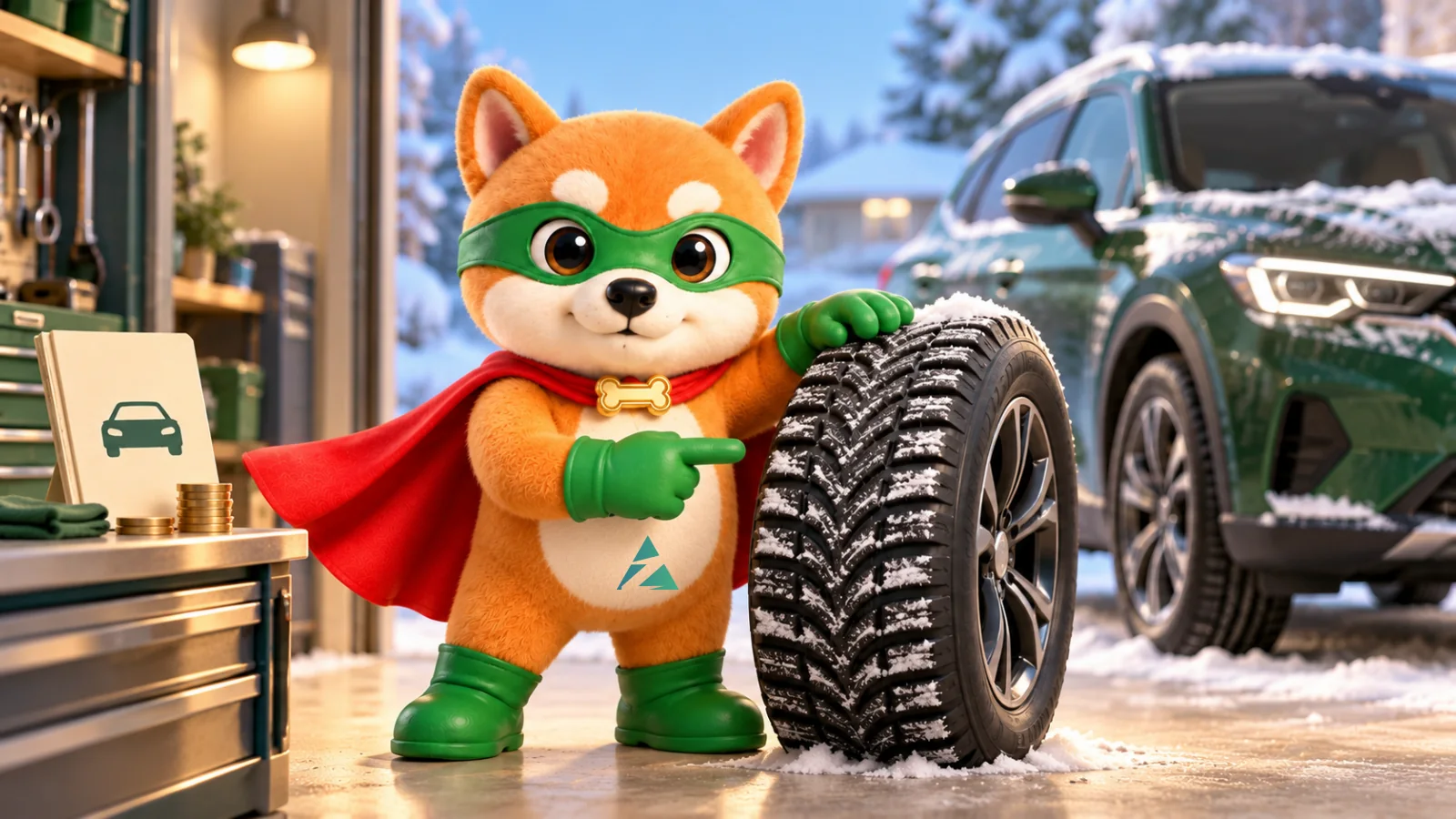
🚗 As temperatures drop, Ontario drivers are getting ready for winter tires again.
Many people think they only need winter tires once it starts snowing. In fact, when temperatures consistently fall to around 7°C or below, it is time to start considering a switch to winter tires. Ordinary all-season tires gradually become harder in low temperatures, which can reduce their grip.
Along with helping you drive more safely, installing suitable winter tires may qualify you for an auto insurance discount. Here are a few things worth knowing before you change your tires.
❄️ 1. When is the best time to switch to winter tires?
A simple guide is to watch the temperature, rather than waiting for snow.
When temperatures stay at 7°C or below, you can start arranging your winter tire change. You do not need to wait for the first major snowfall.
📌 Booking ahead has another benefit: it can help you avoid the rush at repair shops after temperatures drop.
🚙 2. What are the benefits of winter tires?
Winter tires use rubber compounds and tread designs suited to low temperatures. They generally provide better grip and handling in cold, snowy and icy conditions.
Installing winter tires can help:
- Improve traction on winter roads.
- Improve vehicle stability and handling on snow and ice.
- Shorten braking distances under suitable conditions.
⚠️ A reminder: Winter tires cannot eliminate winter driving risks. In snowy or icy weather, you still need to slow down, leave more space behind the vehicle ahead, and avoid sudden braking or steering.
💰 3. Can winter tires help you save on car insurance?
Yes. In Ontario, auto insurers must offer a discount for vehicles fitted with winter tires that meet their eligibility requirements.
The Financial Services Regulatory Authority of Ontario (FSRA) advises drivers to ask their insurer or insurance broker about eligibility and discount arrangements.
Discount amounts, tire requirements and reporting procedures may differ between insurers.
After installing winter tires, we suggest that you:
- Contact your insurance broker or insurer to confirm whether you qualify.
- Have your tire information and installation date ready.
- Check that the discount has been correctly applied to your policy.
Do not assume the discount will take effect automatically after installation. It is best to confirm.
🛞 4. Three things to remember when changing your tires
1. Replace all four tires together
Transport Canada recommends installing four matching winter tires to help maintain your vehicle's handling and stability. Do not replace only the front or rear tires.
2. Check the tire markings and condition
When shopping, look for the three-peak mountain snowflake symbol on the tire's sidewall. Check the tread depth and look for signs of aging or damage.
3. Check tire pressure regularly
Tire pressure can fall as the temperature drops. Follow your vehicle manufacturer's guidance when checking tire pressure, especially before a long trip.
🛡️ 5. Winter driving: safety and insurance coverage both matter
Installing winter tires is an important part of preparing for winter driving. It cannot replace good driving habits or guarantee that a claim will be covered after an accident.
Coverage and claim outcomes depend on your policy, the circumstances of the accident and the applicable terms.
Along with changing your tires ahead of time, we suggest reviewing your auto insurance before winter. Make sure your vehicle details, driver information and policy arrangements are accurate.
🤝 A reminder from A-Z Insurance
Canadian winter road conditions can change considerably. Checking your vehicle ahead of time, switching to winter tires promptly and understanding your insurance coverage can help you prepare for winter driving with greater confidence.
If you would like to learn more about Ontario winter tire insurance discounts or have questions about your auto coverage, contact A-Z Insurance for more information.
❄️ Prepare early and stay safe this winter.